
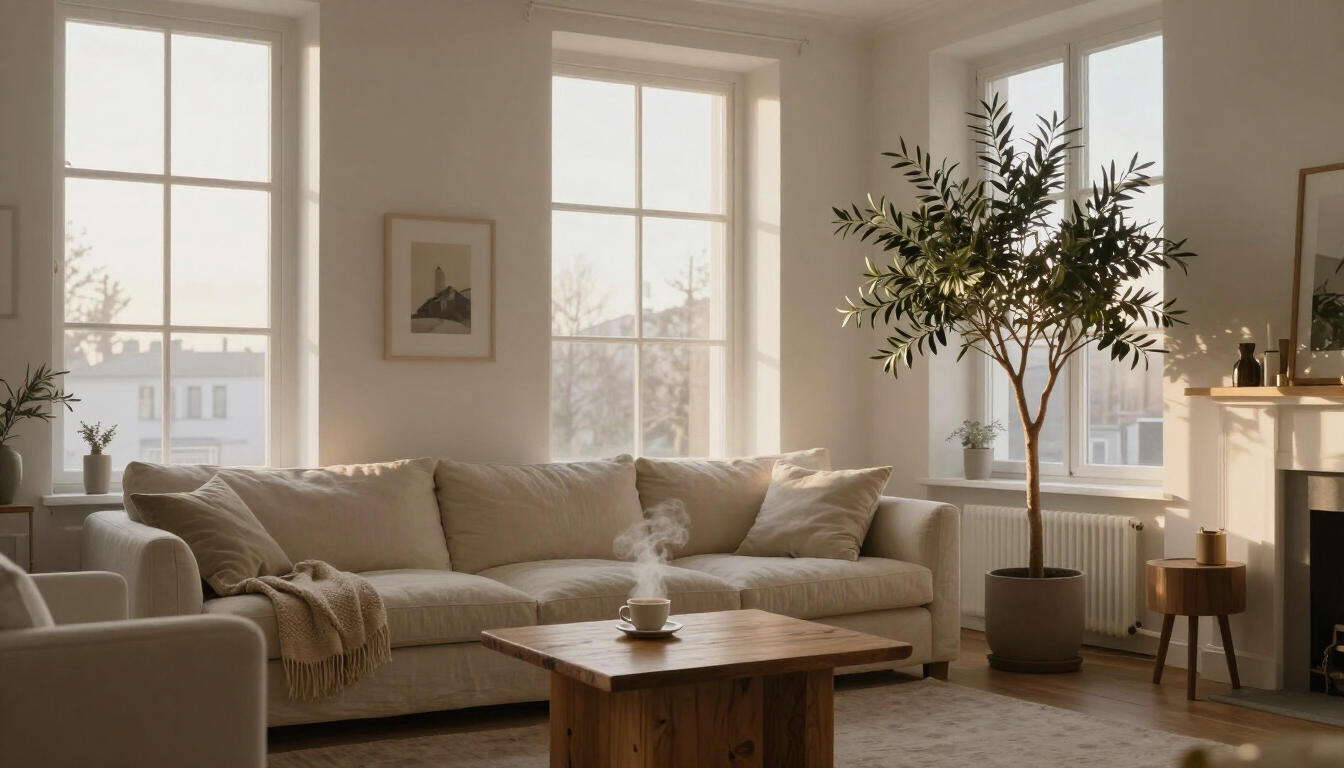
Morning light enters the room before I'm fully awake. It comes in quietly, without announcement — finding the steam rising from a coffee cup, catching the edge of a linen throw, grazing the pale green leaves of an olive tree in the corner. Nothing in the room feels expensive. Everything feels intentional.
That distinction matters more than I once thought. A home isn't something we decorate. It isn't a backdrop to our lives or a statement about our taste. It is something that quietly shapes our thoughts, our emotions, and our habits every single day — whether or not we've paused long enough to notice.
This is what I've been thinking about lately. The relationship between the spaces we live in and the people we're trying to become.
Your Home Is Always Talking To You
Clutter is loud. Not in the way that music is loud, or that traffic is loud — but in the way that a to-do list left open on your desk is loud. It sits in the corner of your vision and hums. It reminds you of things unfinished, decisions deferred, objects accumulated without quite knowing why.
Research has started to confirm what most of us already sense instinctively: the visual noise of a cluttered environment competes with our ability to focus, rest, and feel at ease. Our brains are constantly scanning our surroundings. When there's too much to process, they can't fully settle.
Calm environments don't require minimalism as a strict philosophy. They require intention. The question isn't how little you own — it's whether everything around you has earned its place. Whether it's doing something useful, something beautiful, or something that simply brings you peace.
A home that feels calm allows thought to expand, creativity to surface, and the nervous system to finally exhale. You don't have to understand exactly why it works. You just have to walk into a room like that and feel it.
Create Space Before You Buy More Things
There's a natural impulse, when a room feels wrong, to add something. A new lamp, a different rug, another decorative object. The impulse makes sense — we are looking for a solution, and buying something feels like taking action.
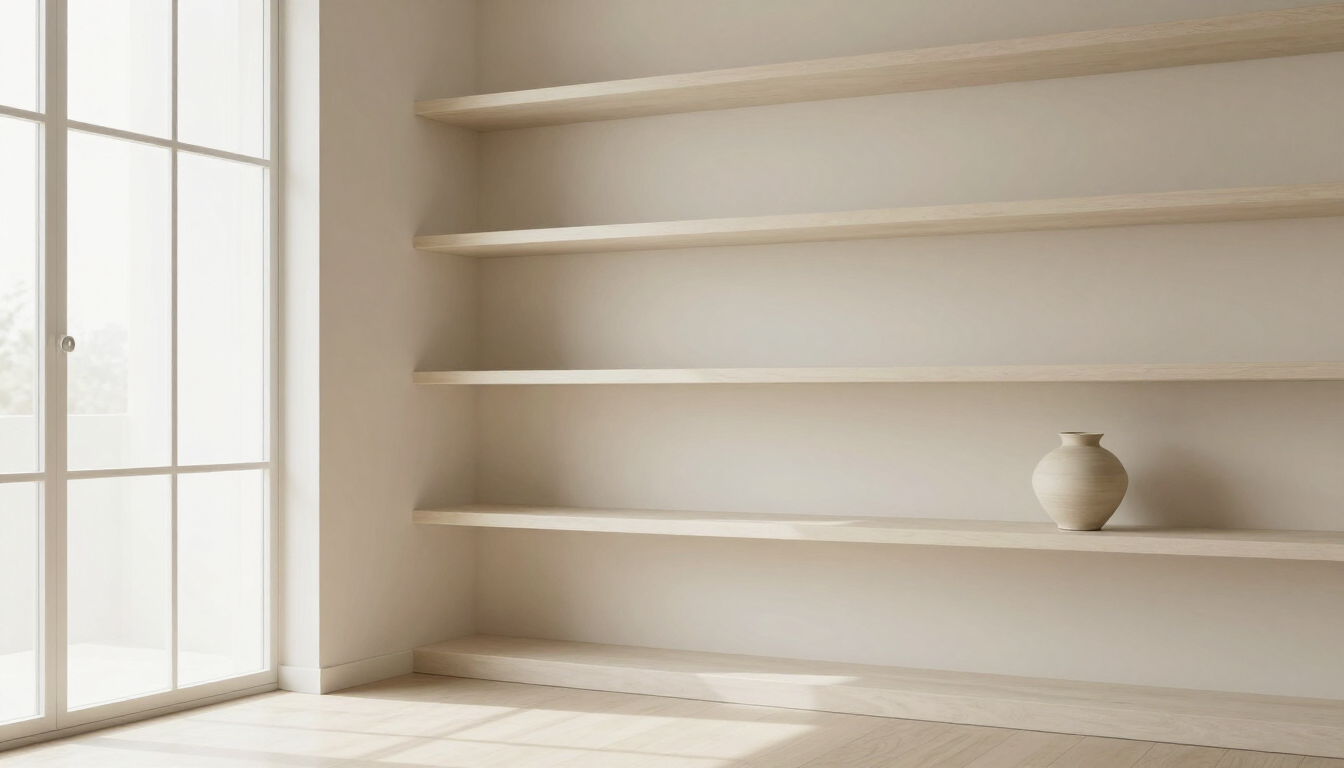
But the rooms I find most beautiful, most liveable, most genuinely restful, almost always have something taken away. A cleared surface. A corner left open. A shelf with room to breathe rather than edges stacked to capacity.
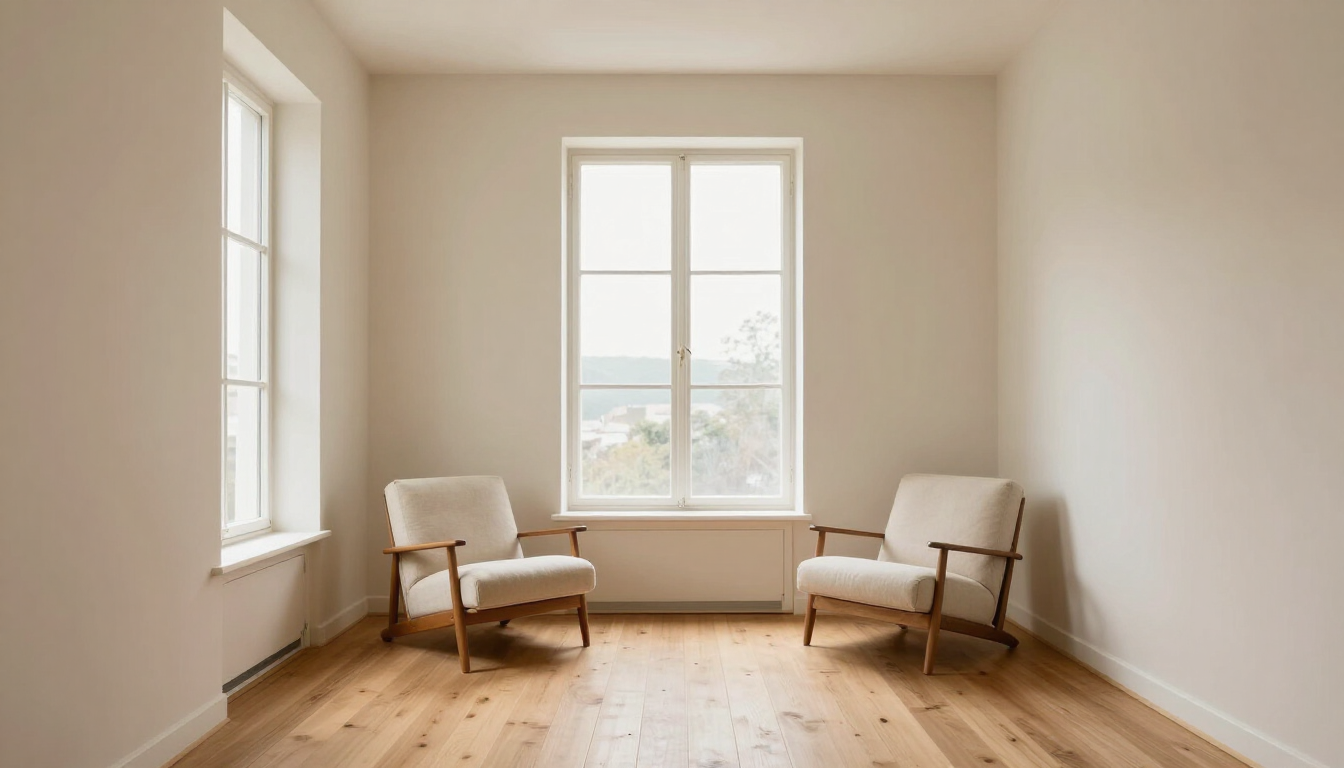
Empty space is not wasted space. In Japanese design philosophy, ma — the concept of meaningful emptiness — describes the pause between notes that gives music its form. A room works the same way. The blank wall doesn't need to be filled. The open corner doesn't need furniture. That negative space is doing real work: it gives the rest of the room somewhere to land.
Before the next purchase, try removing one thing instead. You might be surprised how much better the room breathes.
Light Changes Everything
I've repainted rooms and rearranged furniture trying to fix a feeling, only to realize the problem was always the light. Too bright, too blue, too uniform — or simply absent at the wrong time of day.
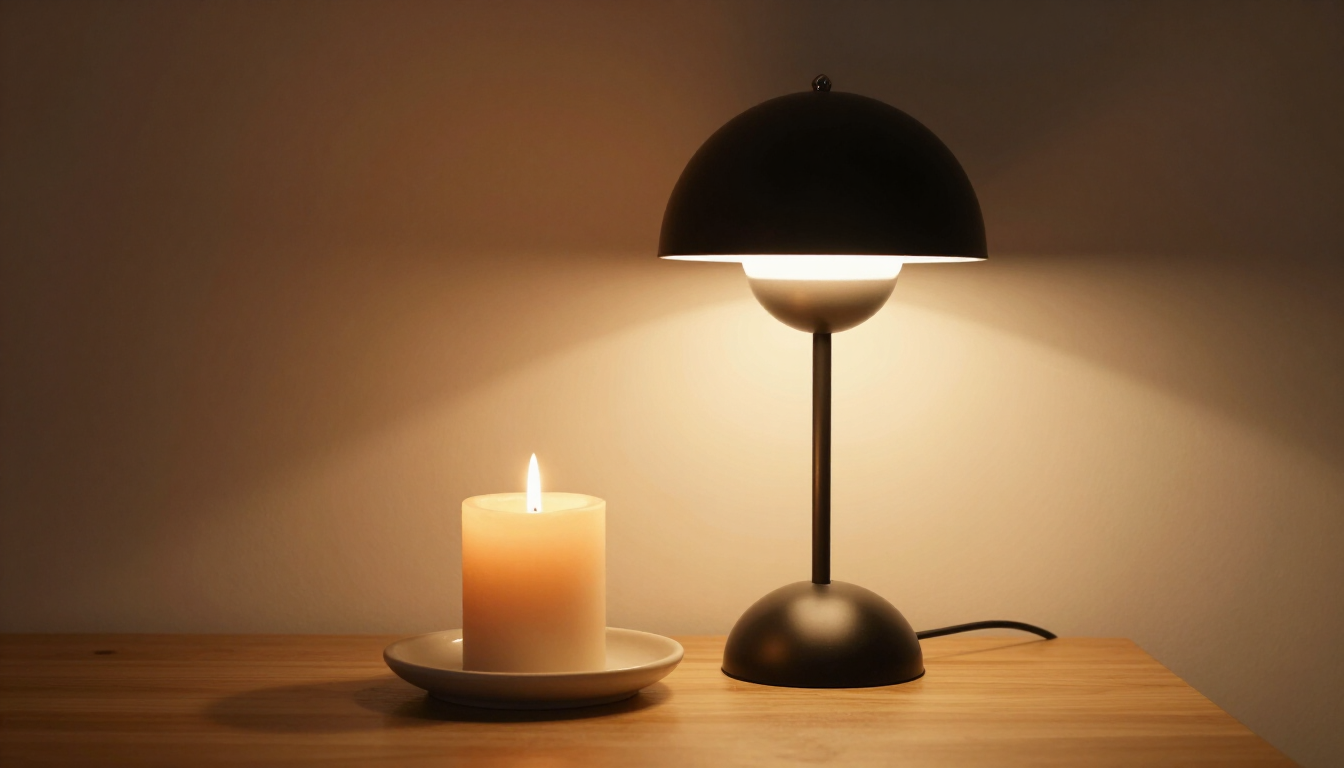
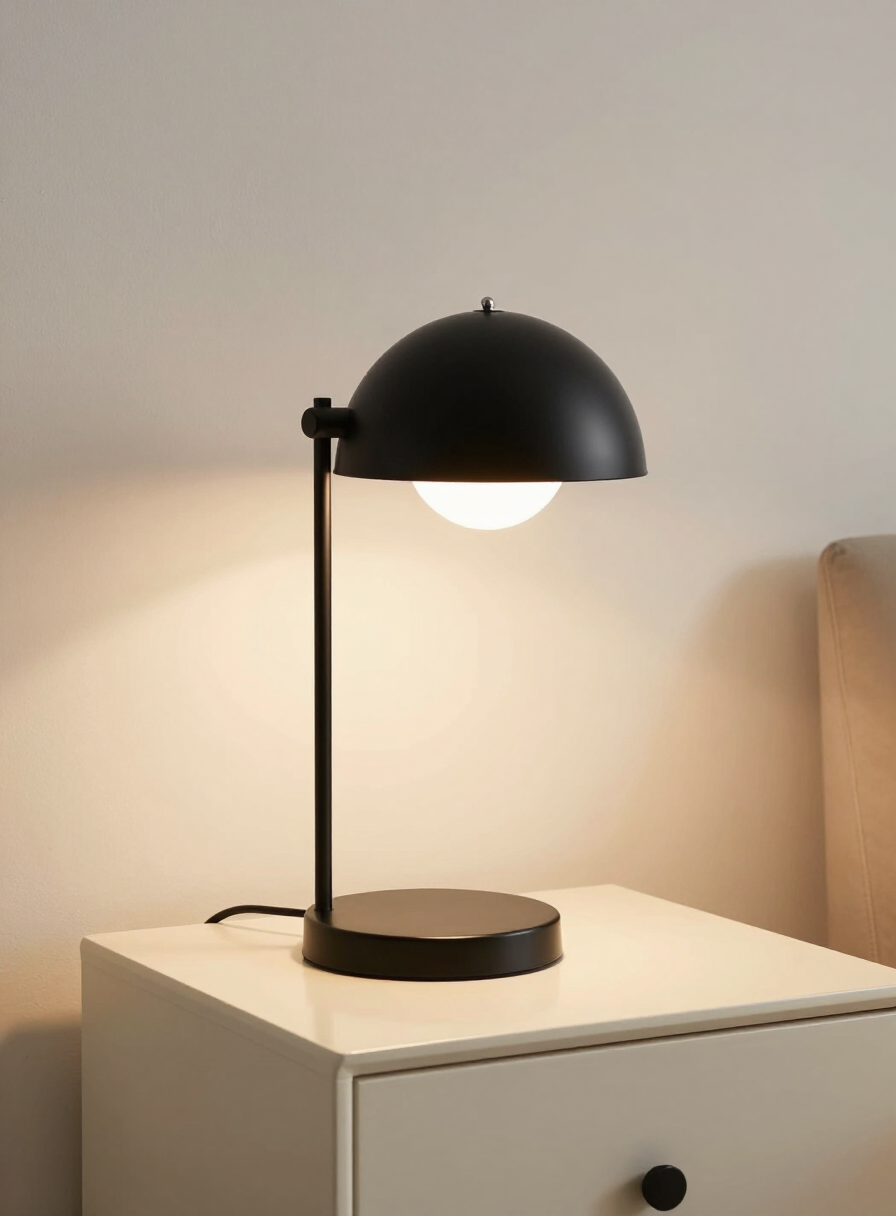
Morning light is different from afternoon light. Afternoon light is different from evening light. Each has a quality, a temperature, a way of making a room feel spacious or intimate, alive or still. The spaces I love most are designed to work with each shift — curtains sheer enough to let morning in, lamps warm enough to make evenings feel like sanctuary.
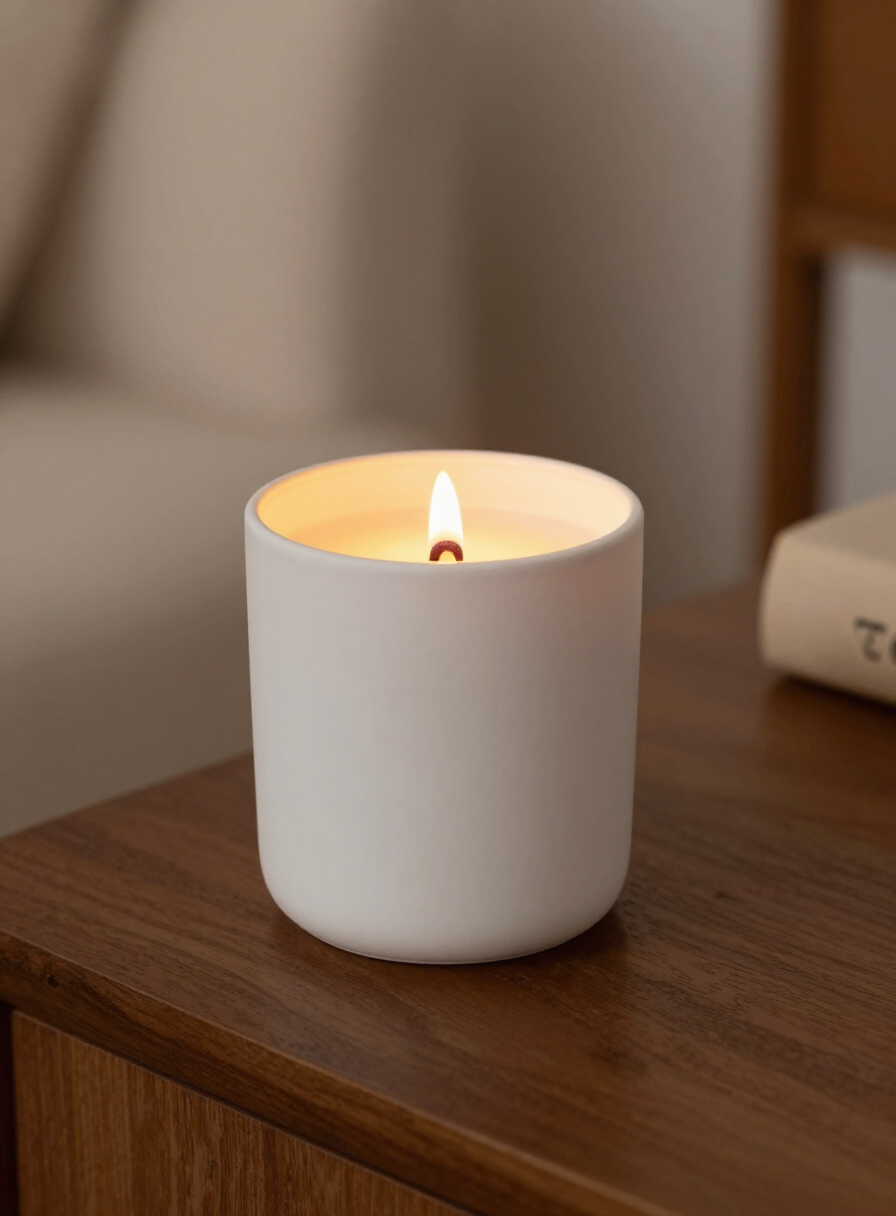
Candles deserve more credit than we give them. Not for scent or ritual, though those matter too, but for the specific quality of their light — the slight flicker, the warmth that no LED has quite replicated. There is something about candlelight that slows time. Placed in an evening room, it does something that no overhead fixture can.
This article contains affiliate links. If you buy through them, Almanac Avenue may earn a commission at no extra cost to you.
Bring Nature Inside
There is a reason that the rooms I return to in memory — the places I have felt most at ease — almost always involve something living. A plant on a windowsill. A wooden table worn soft with use. The texture of linen. A stone bowl. These are materials that have their own quiet presence, their own warmth.
We spend most of our lives surrounded by synthetic surfaces: glass, plastic, engineered composites that reflect light rather than absorb it. Natural materials do something different. They feel different underfoot, under the hand. They age rather than deteriorate. They carry time in a way that synthetic things rarely do.
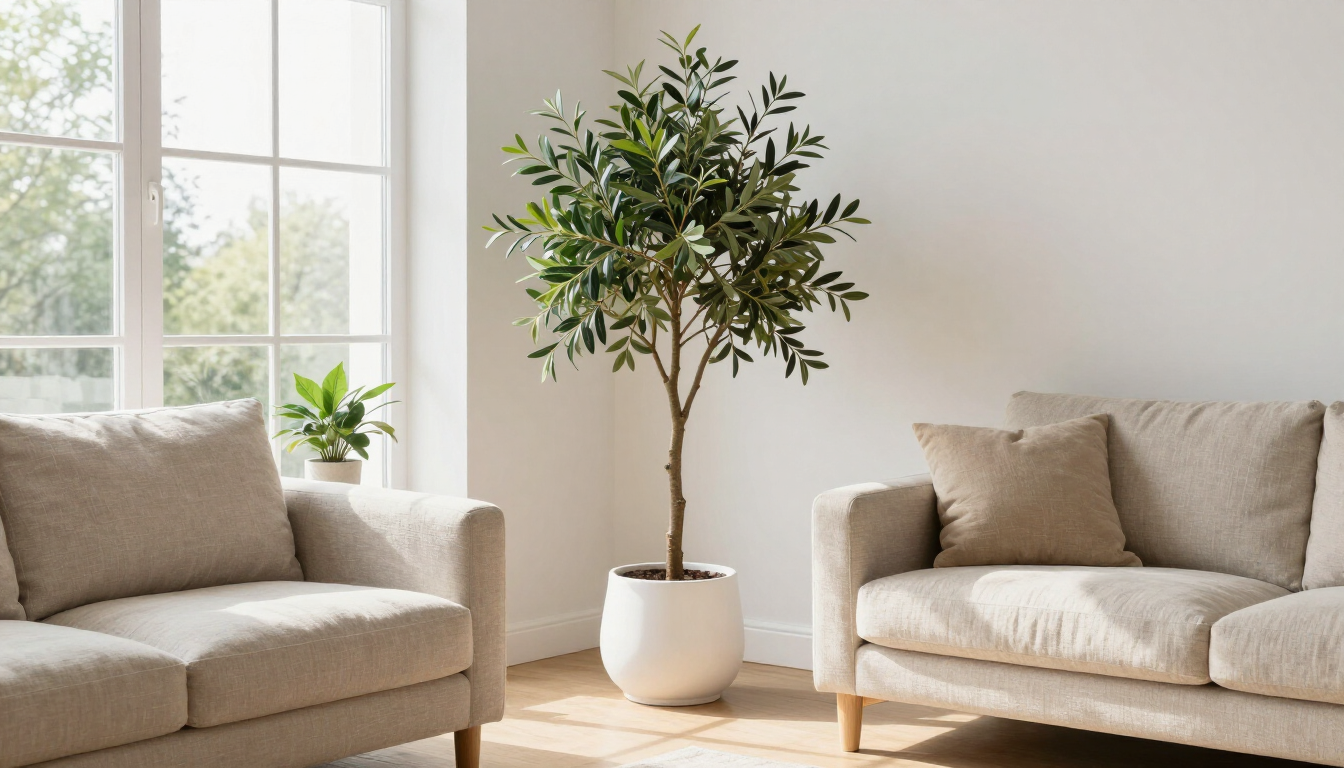
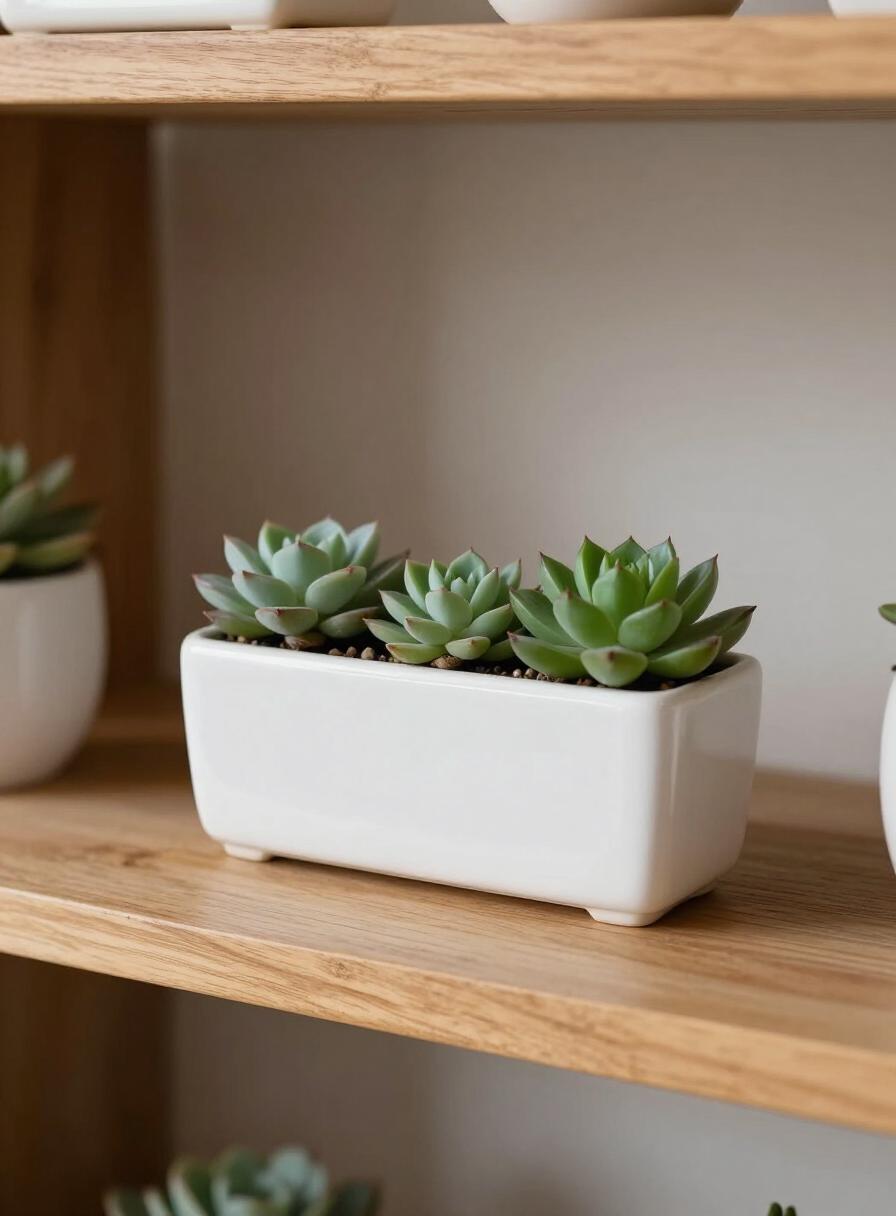
Plants, specifically, soften a room in a way that's difficult to replicate with any object. They bring movement — the slow turn of a leaf toward light, the slight sway in a draft. They bring color that isn't flat. They bring a quality of aliveness that matters more than most of us acknowledge.
You don't need a garden. You need one plant on a table, and a window that gives it light.
Comfort Is A Design Choice
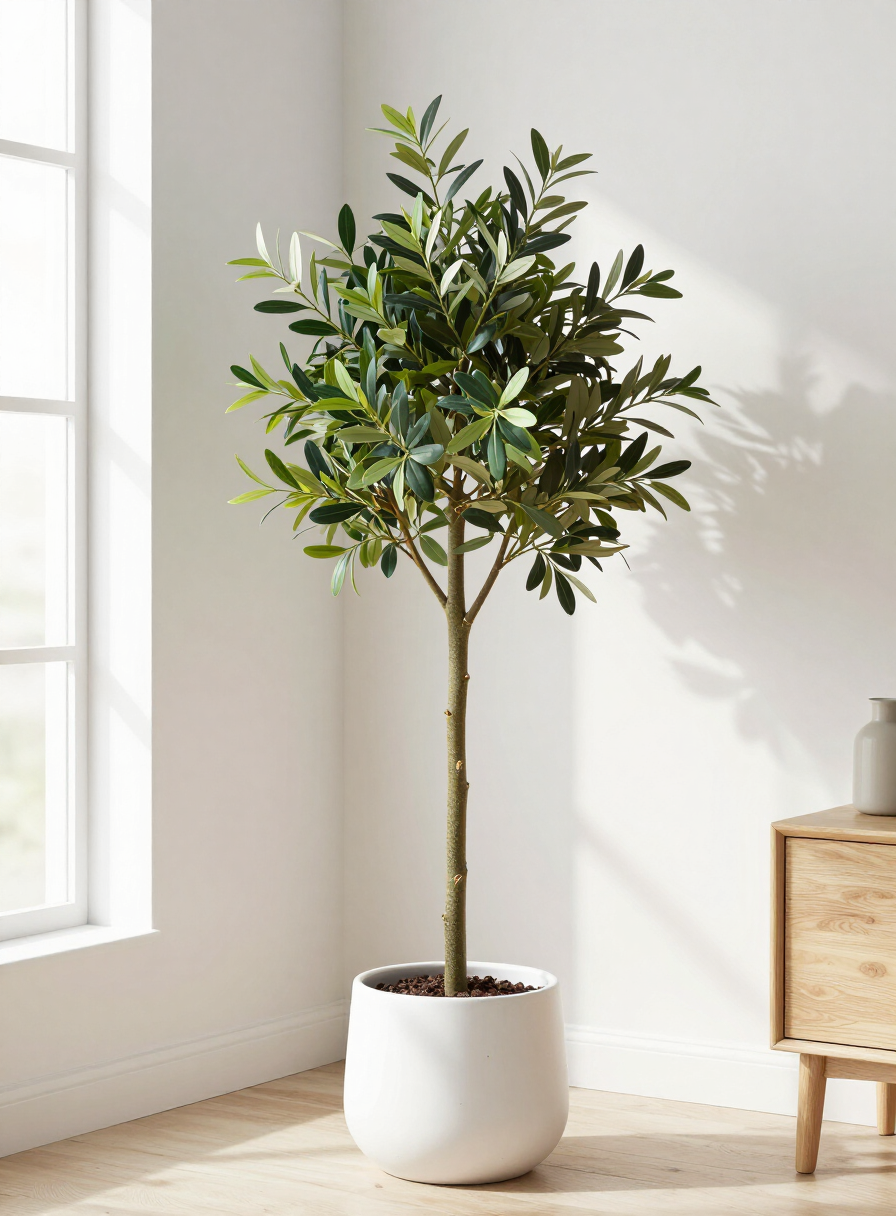
We've been taught, somewhere along the way, to treat comfort as secondary. As something that gets addressed after the aesthetics are settled. But comfort is design — it's among the most important design decisions a home can make.
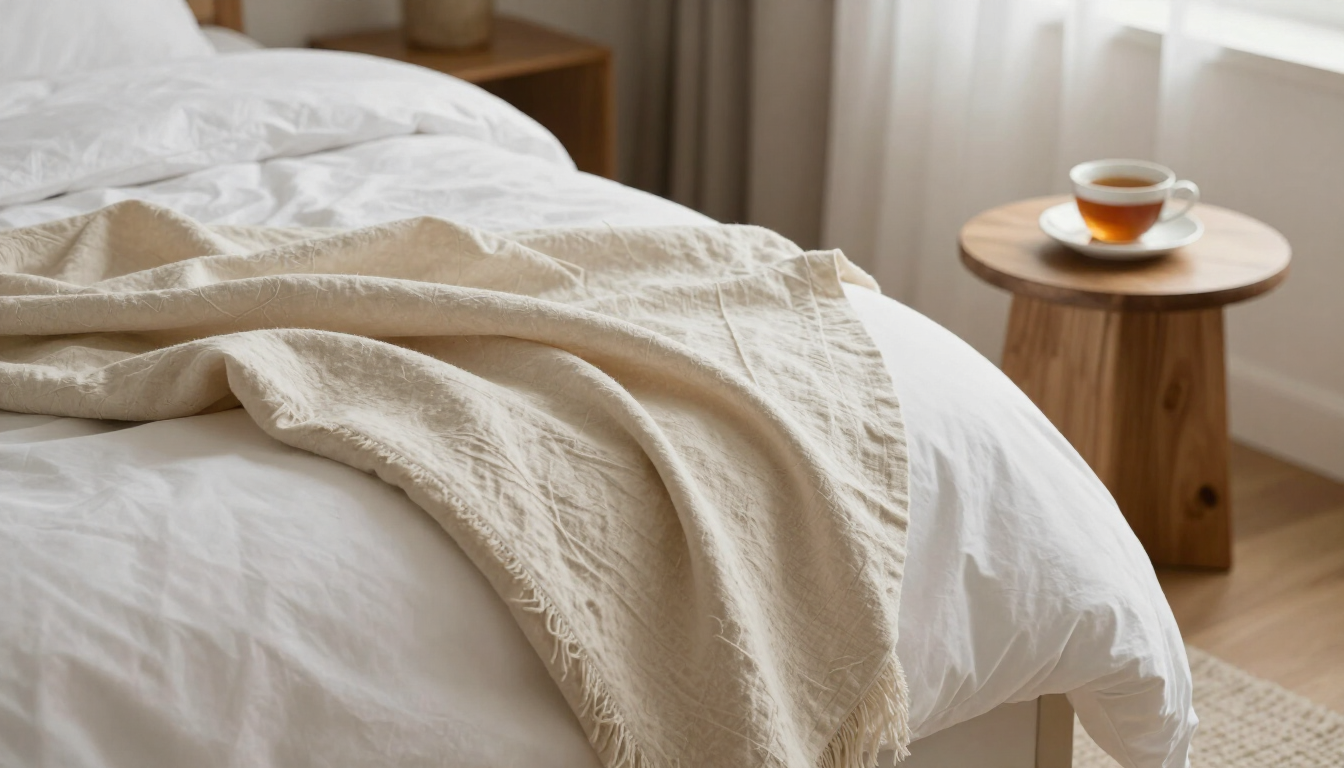
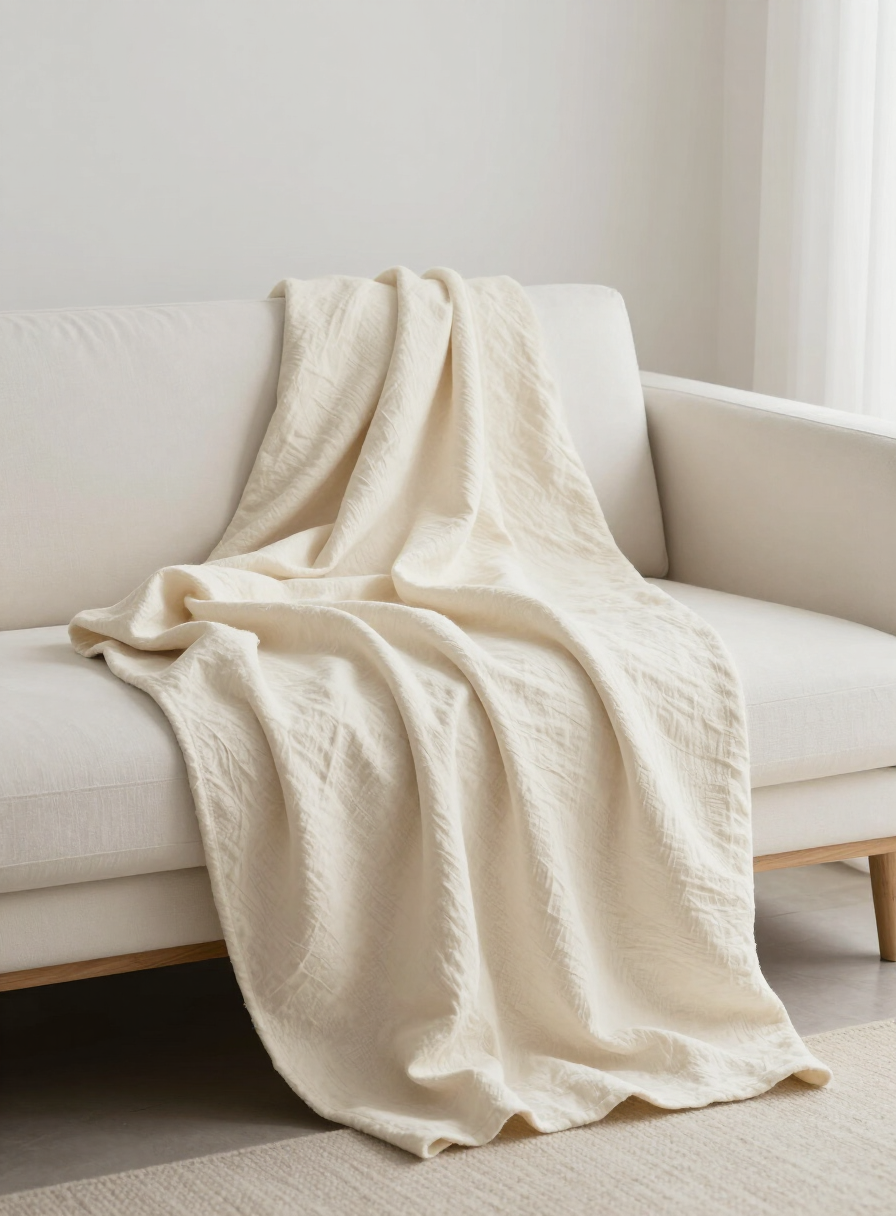
The sofa you sink into on a Sunday afternoon. The throw you reach for on a rainy Tuesday evening. The chair that feels like it was made specifically for the way you sit and think and read. These aren't afterthoughts. They are the reason the home works.
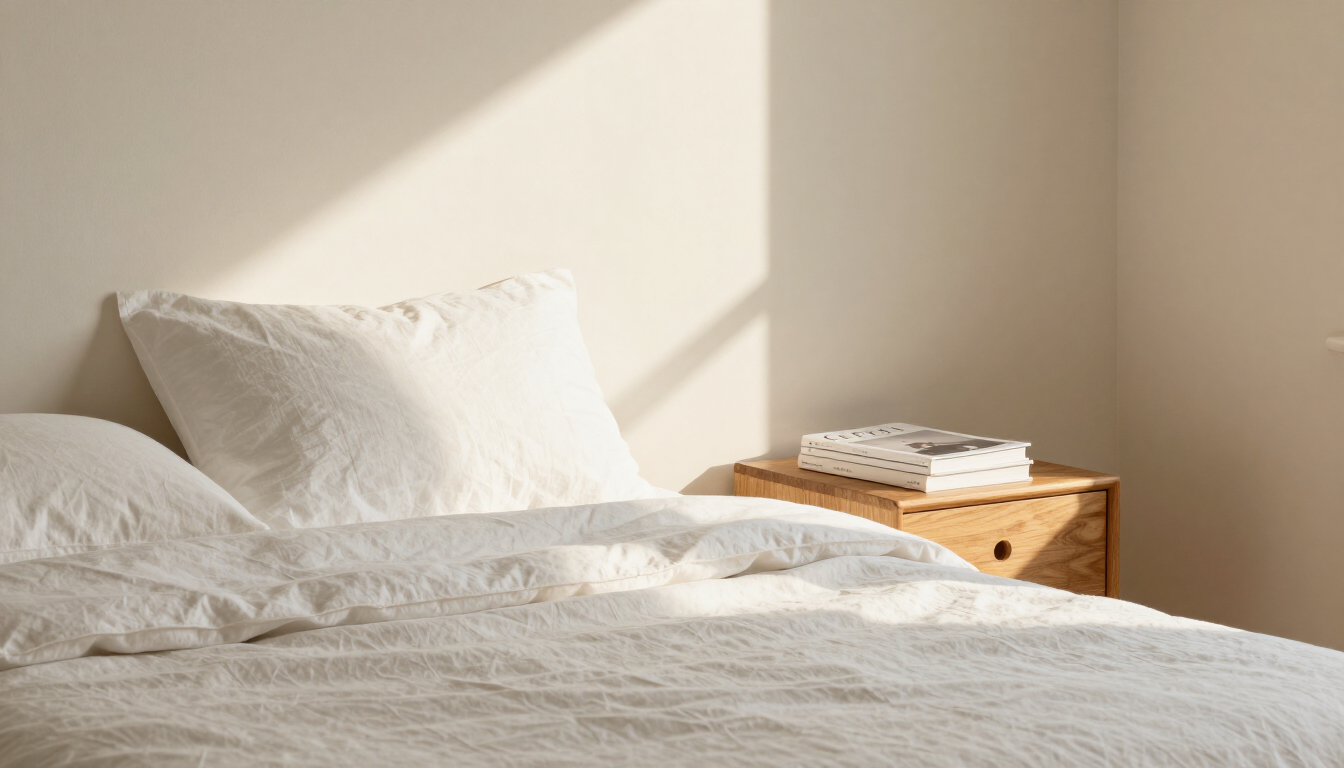
I think about slow Sundays often. The particular quality of light in a room when there's nowhere to be. A book. A blanket. A cup of something warm. The quiet act of doing nothing at all — not as laziness, but as an intentional form of restoration. A home that supports those moments is a home doing its job.
A Home Worth Returning To
The most important question I've started asking about a home — mine or anyone's — isn't whether it looks impressive. It's whether it recharges the person who lives there.
A home designed for guests will always feel slightly performative. A home designed for its inhabitants will always feel lived in, in the best possible sense. There is a warmth to a space that is genuinely used, genuinely loved, genuinely suited to the daily life being lived inside it.
Trends will always exist. There will always be a new color, a new material, a new style that feels urgent and necessary. But timeless spaces are built differently. They are built on quality over quantity, on natural materials that age well, on pieces chosen carefully and kept long. The spaces I find most beautiful are never the most fashionable — they are the most honest.
A home worth returning to at the end of a long day. A home that knows what it is. That, more than anything, is the goal.
"I've stopped asking whether something looks beautiful. Instead I ask a different question. Will I still love living with this five years from now? That single question has transformed the way I decorate, shop, and care for my home."— Ava Collins
Five Principles for a Calm Home
- 01Choose fewer things.
Curate with intention. Every object should earn its place — through usefulness, beauty, or meaning.
- 02Leave room to breathe.
Empty space is not wasted space. It gives the room somewhere to land, and the eye somewhere to rest.
- 03Prioritize natural light.
Before any lamp or fixture, consider how daylight moves through your space and design around it.
- 04Buy for longevity.
Choose quality over novelty. Things built to last carry a different quality — they settle into a home rather than dating it.
- 05Create daily rituals.
The practices that happen in a space give it meaning. Morning coffee, evening candles, weekend slow mornings — these are the rituals that make a house a home.